
Award in First Aid for Adults, Children and Infants
May 6, 2024 2026-09-07 15:58Award in First Aid for Adults, Children and Infants
Price
€110.00
Instructor
Qualified Nurse
Attendance
Part-Time
Duration
4 Weeks
Language
Maltese, English
Category
Further Education Course
MQF/EQF Level
MQF 3
Total Credits
ECTS 2
Date
Open
Price
€110.00
Instructor
Qualified Nurse
Attendance
Part-Time
Duration
4 Weeks
Language
Maltese, English
Category
Further Education Course
MQF/EQF Level
MQF 3
Total Credits
ECTS 2
Date
24th January, 2026
Price
€110.00
Instructor
Qualified Nurse
Attendance
Part-Time
Duration
4 Weeks
Language
Maltese, English
Category
Further Education Course
MQF/EQF Level
MQF 3
Total Credits
ECTS 2
Date
24th January, 2026
Requirements
- A practical session is required after completion of the theory section
- A person over 16 years of age who is fluent in Maltese and English
- In the event of a participant not passing the practical test on their initial try, they are granted an additional attempt, free of charge
- Course bookings must be made no later than one day before the course date
Target audiences
- Any person over 16 years
- Persons who want to develop the skills to manage emergency situations and provide first aid to a casualty
- Companies and organisations requiring fully qualified workplace first aiders
- Overview
- Curriculum
- Outcomes
- Information
- Grading
Accreditation
This course is accredited and licensed by the Malta Further and Higher Education Authority (MFHEA)
- License Number: 2023-002;
- License Category: Further Education Institution
The Malta Further and Higher Education Authority (MFHEA) is responsible for fostering the development and achievement of excellence in Further and Higher education in Malta through effective licensing, accreditation, quality assurance, research, and recognition of programs of study, established under the Malta Qualifications Framework (MQF).
Course Description
This course is our most comprehensive skills and training. Course duration is estimated at around 4 weeks; whereby attendees will be proficient in managing critical situations, delegate tasks to bystanders, and engage and inform the emergency services.
Mode of Delivery: Face-to-face
What is included
- Adult Basic Life Support (BLS);
- Paediatric Basic Life Support (PBLS) Infant and Child;
- First Aid for Adult, Child and Infant (All Ages);
- Automated External Defibrillator (AED) Adult and Child;
- New Covid suspected, confirmed and for family member’s approach.
Certification
Successful participants will receive a recognised European certificate MQF 3, 2 ECTS. Certificate is valid for 3 years.
Assessment
This First Aid course is assessed through a written multiple-choice test and a practical test.
Important Information
This course is available for a minimum of 25 participants. Kindly note that if you book this course, the date will be communicated directly via email. If within 1 month, 25 participants are not gathered for this course, you will be notified and refunded back the full price.
For more information before booking, kindly email us on maltafirstaid@hotmail.com
Location
Image(s) by Freepik (www.freepik.com)
BLS / PBLS Theory
- Psychological aspect of the first aider;
- Legal aspect;
- Scene assessment for safety;
- Approaching family member for CPR;
- CPR adult, child and infant;
- Approaching suspected or confirmed case of COVID-19 for CPR;
- Emergency care age definitions;
- Primary assessment;
- Chain of survival;
- Cycle of care;
- Complete or sever airway obstruction;
- Call First – Care first approach;
- Heart rhythms and defibrillation;
- How AED works, its safety and maintenance;
- AED considerations;
- Scene assessment for safety;
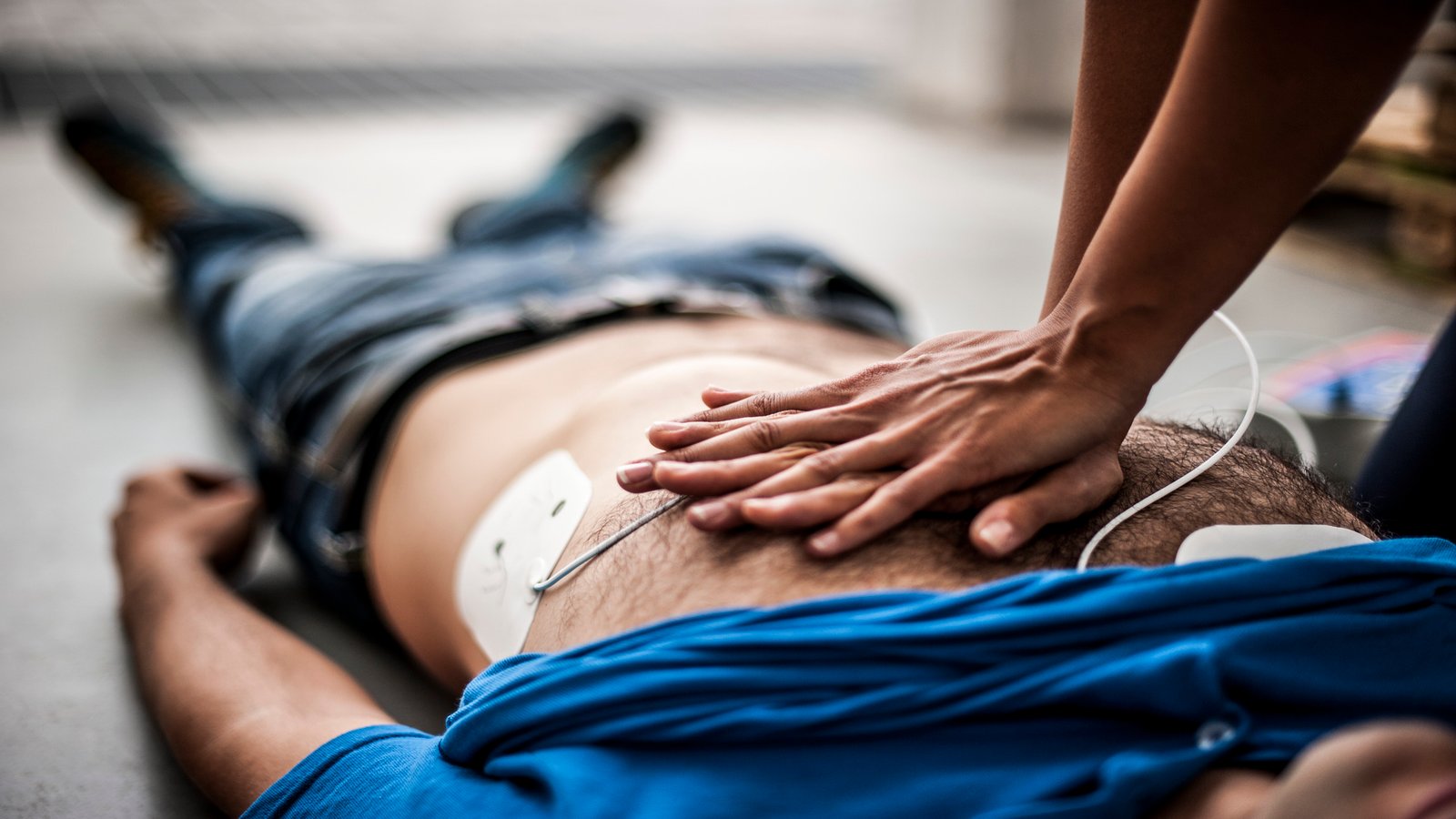
- Chest compressions / Rescue breaths (CPR all ages);
- AED use;
- Dealing with unconscious casualties and the recovery position;
- Choking adult, child and infant;
- Discussion.
BLS / PBLS Practical
- Demonstrations and scenarios;
- Performing cardio pulmonary resuscitation (CPR);
- Practice and assessment on adult, child and infant advanced QCPR mannequins;
- Use the latest AED equipment and assessment;
- Donning and doffing and appropriate disposal of surgical gloves;
- Practice the recovery position.
First Aid Course Adult / Child and Infant Theory
- Infection control/personal protective equipment;
- Bleeding;
- Shock;
- Spinal injury;
- Dislocation and fractures;
- Minor cuts, scrapes and bruises;
- Dental injuries;
- Cuts and penetration to the eye;
- Irritants to the eye;
- Strains and sprains;
- Crash injuries;
- Head injuries;
- Burns (thermal, chemical, electrical);
- Hypothermia;
- Head stroke/heat exhaustion;
- Meningitis;
- Stroke;
- Hypoglycemia/Hyperglycemia;
- Asthma;
- Seizures;
- Allergic reactions;
- Poisoning;
- Venomous bites and stings;
- Discussion.
First Aid Course Adult / Child and Infant Practical
- Donning and doffing and appropriate disposal of surgical gloves;
- Application of triangular bandage;
- How to apply swab and bandages to control bleeding and trauma;
- Training kit will be provided for the practical session to each participant;
- Hands on skills of First Aid to the injured.
This course will lead to a participant having theoretical and actual knowledge on the application of first aid principles in an adult, child or infant and as such will prepare the participant for all walks of life. Various places of work specify the allotment of first aid trained professionals as part of their various workforce; this course will allow an individual to apply for such vacancies and so serves as a vantage point to future employment.
The participant will be able to:
- Demonstrate how to assess a scene for various safety hazards including blood borne pathogens and plan a safe approach to the incident including the use of protective barriers appropriately;
- Show how to perform a primary survey by checking that the Airway is clear, by using head tilt, chin lift techniques as well as jaw thrust techniques and that the casualty is breathing adequately;
- Demonstrate how to deliver chest compressions in conjunction with delivering Rescue Breaths to a casualty who is not breathing adequately;
- Practice the use of an automated external defibrillator, by placing the pads at the correct position as recommended by the European Resuscitation Council;
- Demonstrate how to place an unresponsive, breathing casualty in a recovery position and then alert the emergency services;
- Monitor a casualty’s breathing and circulation for signs of deterioration while keeping in mind varying reference ranges across age groups;
- Check a responsive/unresponsive (but breathing) casualty for signs of serious bleeding, shock or spinal injury, discussing the differences between age groups;
- Apply an effective direct pressure method in a serious bleeding scenario or failing this, indicating appropriate techniques for indirect pressure for controlling bleeding;
- Treat an un/responsive casualty for shock;
- Show how to stabilize the head and neck of a casualty suspected of suffering from spinal injuries, discussing various techniques that differ across age groups;
- Apply back blows and abdominal thrusts to a conscious choking casualty being either an adult, child and infant;
- Treat superficial burns effectively in all ages;
- Perform a head-to-toe injury assessment on a responsive casualty – assessing for wounds, bleeding, dislocations, bruises fractures, spinal injury, numbness, loss of sensation and deformities. Difficulties when assessing young people and the mentally infirm will be discussed during lectures;
- Perform an illness assessment on a responsive casualty – assessment for allergic reaction, pre-existing medical conditions, respiratory symptoms (deep/shallow breathing), breath sound (wheezing, crackles), temperature, pallor, confusion and possible poisoning;
- Apply appropriate bandaging techniques for swelling and support of an extremity or joint.
Learning Methods
A presentation will be provided to the candidates which will be discussed in further detail by the instructor. Apart from this the learners will be expected to read the core material provided. Various scenarios and skills will be demonstrated by the instructor and each learner will be guided trough the various skills needed
Duration
Contact: 12 hours
Self-Study: 21 hours
Practice/Placement: 16 hours
Assessment: 1 hour
The candidate will be assessed by undergoing oral and practical tests that will take place throughout the entire course, in order to assess and consolidate the learning being covered.
- Oral test participants 60% – Pass /Fail
- Practical Test participants 40% – Pass/Fail
- Pass rates: 60%
Student payment agreement (as per MFHEA rules)
Qualified Nurse
Gesmond Micallef; A registered, qualified nurse with over 37 years of experience in the field of health care.
Main area of expertise is in Emergency, setting and delivering emergency care both in the pre hospital, emergency department as well as in primary health care.

